 MIG Innovations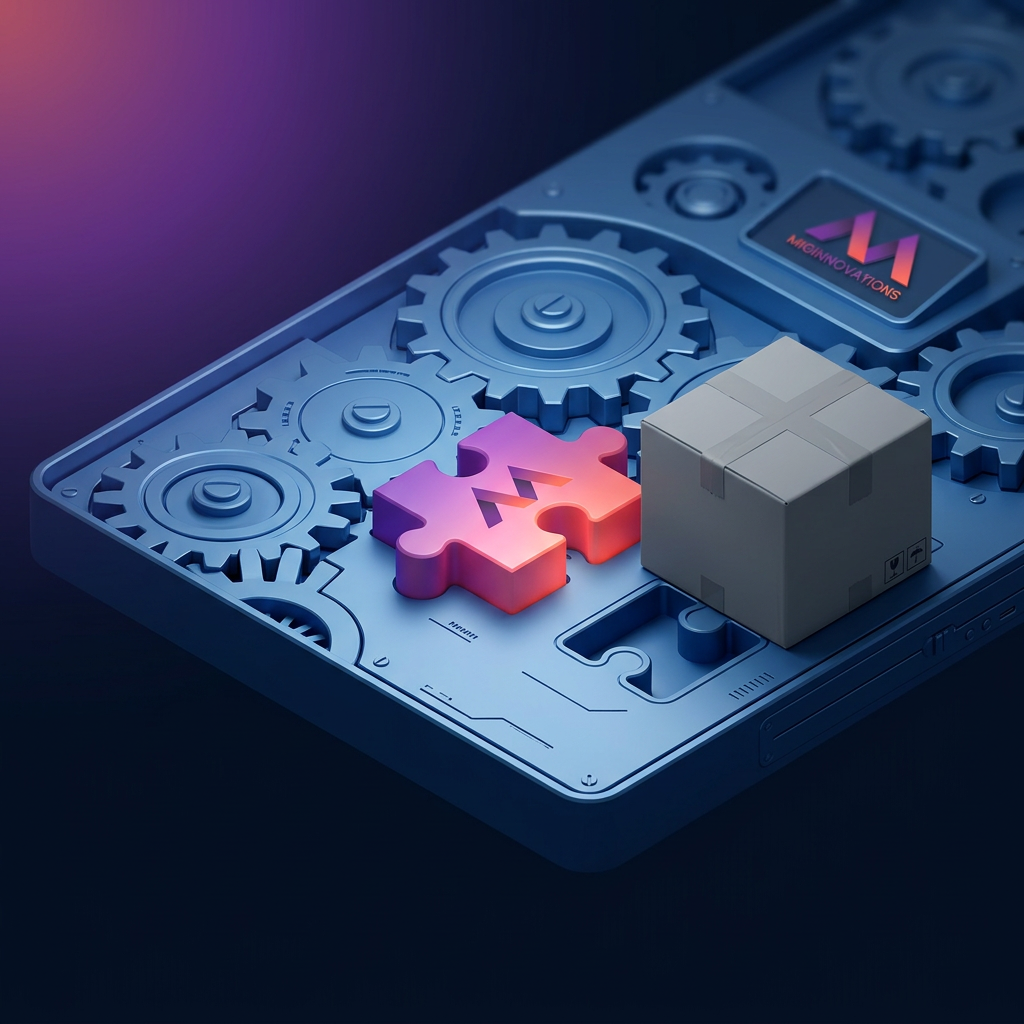
Every growing business hits a point where its tools stop keeping up. The spreadsheet that ran the whole operation now has a dozen tabs, and two people are afraid to touch it. The off-the-shelf app does 80% of what you need and fights you on the other 20%. At that point the question becomes, do we buy something new or build something that fits? Here is how to think it through.
The case for off-the-shelf software
Buying a ready-made product is the right call more often than not:
- It works today. No build time, no discovery phase.
- Lower up-front cost. You are splitting the development cost across thousands of other customers.
- Someone else maintains it. Security patches, updates, and hosting are the vendor's problem.
- It is proven. Bugs have been found and fixed by users before you.
Off-the-shelf wins whenever your process is standard—accounting, email, basic CRM, scheduling, and payroll. There is no advantage in building your own version of something every business does the same way.
Where off-the-shelf starts to hurt
The friction usually shows up as
- Paying per user, every month, for features you will never use
- Changing how your team works to match what the software expects
- Data locked in a system that will not talk to your other tools
- The one capability you actually need sitting behind a "premium" tier or an add-on
- Three or four separate apps held together by staff copying data between them by hand
When you are spending real money and real hours working around the software, the math shifts.
The case for custom software
A custom build makes sense when the process is specific to how you do business:
- It fits your exact workflow instead of a generic one.
- You own it—no per-seat inflation, no vendor removing a feature you depend on
- It connects to the systems you already run.
- It can automate the manual steps that currently sit between your tools.
The trade-off is a higher up-front cost and a build timeline, and it is quoted after a discovery phase rather than off a price list.
A practical middle path
Most businesses do not need to replace everything. The common pattern that works: keep off-the-shelf products for the commodity work—accounting, email, document storage—and build a custom layer only for the part that is actually your business. That is often a workflow automation connecting the tools you already have, not a full platform replacement.
Questions to ask before you decide
- Is this process a competitive advantage, or is it just plumbing?
- How many staff hours per week go into manual workarounds right now?
- What does the off-the-shelf option cost over three years, all in seats, add-ons, and integrations?
- Will it integrate with our other systems or add another island of data?
- What happens to us if the vendor raises prices or drops the feature we rely on?
How we approach it at MIG Innovations
We are a Lakewood software development team, and we start every engagement with discovery—mapping how the work actually flows before recommending anything. Sometimes the answer is "keep the tool you have and automate two steps around it." When a custom build is the right call, you get
a written, fixed-scope quote before work begins. Tell us what you are wrestling with and we will give you an honest read.